A 400-square-foot backyard patio generally runs $5,600 to $8,800 installed in stamped concrete, and $12,000 to $22,000 in wet-laid natural bluestone. That initial investment gap is usually the first factor homeowners notice when comparing masonry services, but price per square foot is only part of the decision. The true deciding factor in cold climates is how each material behaves after fifteen winters of freezing, thawing, and deicing exposure.
Both materials perform exceptionally well when engineered and installed correctly over a properly compacted aggregate base. Both fail in similar ways when subgrade preparation is thin, drainage is neglected, or finish details skip crucial steps. At Q&E Keystone Masonry, every stamped concrete patio in Hatboro is designed around proper base compaction, climate-appropriate material selection, and rigorous moisture management.
Freeze-Thaw Cycles Drive Every Material Decision
In regions experiencing harsh winters, patios routinely undergo 35 to 50 freeze-thaw cycles per season, with ambient temperatures crossing the 32°F threshold repeatedly between late autumn and early spring. Water absorbed into a concrete slab or natural stone expands by approximately 9% upon freezing, generating internal pressures that break down unreinforced materials from the inside out. Severe climate testing demonstrates that repeated shallow freezing does significantly more structural damage over time than sustained deep cold.
The practical result: water absorption matters more than material hardness. A dense, air-entrained concrete mix poured by Q&E Keystone Masonry or a low-absorption natural bluestone will easily survive severe winters. A porous sandstone or an under-specified concrete mix without proper air entrainment will rapidly degrade.
What Each Surface Costs Installed
Material price represents a much smaller share of the overall project cost than most homeowners expect. Excavation, structural base aggregate, formwork, reinforcement, and skilled labor typically account for 55% to 70% of a finished patio invoice regardless of the surface material chosen.
- Stamped Concrete: $14 to $22 per square foot installed, including integral color, accent release color, and a single primary stamp pattern. Multiple accent colors, custom borders, or inlaid banding push the upper end toward $26 per square foot.
- Dry-Laid Natural Flagstone: $22 to $34 per square foot, set over compacted stone dust or aggregate screenings with polymeric sand or stone dust joints.
- Wet-Laid Bluestone on a Concrete Base: $34 to $55 per square foot. This full masonry system includes a steel-reinforced concrete base slab, specialized mortar setting bed, and fully pointed joints executed by master masons.
- Thermal (Sawn) Bluestone Upgrade: Adds roughly $4 to $8 per square foot over full-color natural cleft flagging for uniform thickness and a non-slip, consistent surface texture.
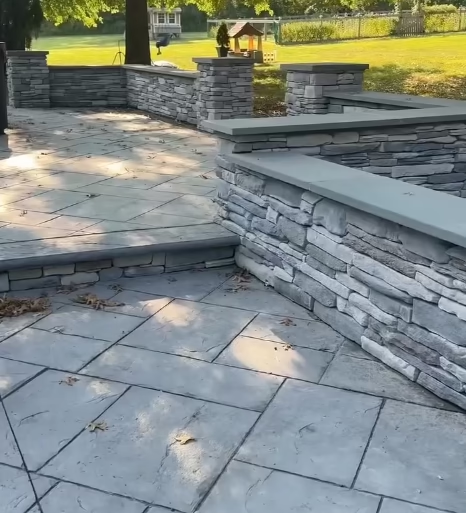
A stamped concrete patio featuring an ashlar slate pattern with a contrasting soldier-course border built by Q&E Keystone Masonry typically lands near $17 per square foot for a straightforward layout.
Maintenance Over a Ten-Year Window
Stamped concrete is not maintenance-free, and sticking to a proper resealing schedule is key to preserving the decorative surface. Decorative stamped concrete relies on a high-grade film-forming acrylic sealer to lock in color contrast and shed surface water. Over time, UV exposure and snow removal naturally wear this layer down.
- Stamped Concrete Resealing: Requires fresh application every 2 to 3 years at $0.60 to $1.40 per square foot. Skipping two cycles in a row causes color fading and increases surface porosity.
- Natural Bluestone Sealing: Optional, but if applied, Q&E Keystone Masonry strictly uses a breathable penetrating sealer every 3 to 5 years. Standard film-forming acrylic sealers trap moisture beneath natural stone layers, leading to surface delamination.
- Joint Upkeep on Wet-Laid Stone: Expect minor repointing on 5% to 15% of joints between years 8 and 12, particularly along exposed perimeter edges and step risers.
- Joint Upkeep on Dry-Laid Stone: Top off polymeric sand or stone dust every 2 to 4 years to prevent weed growth and seed germination.
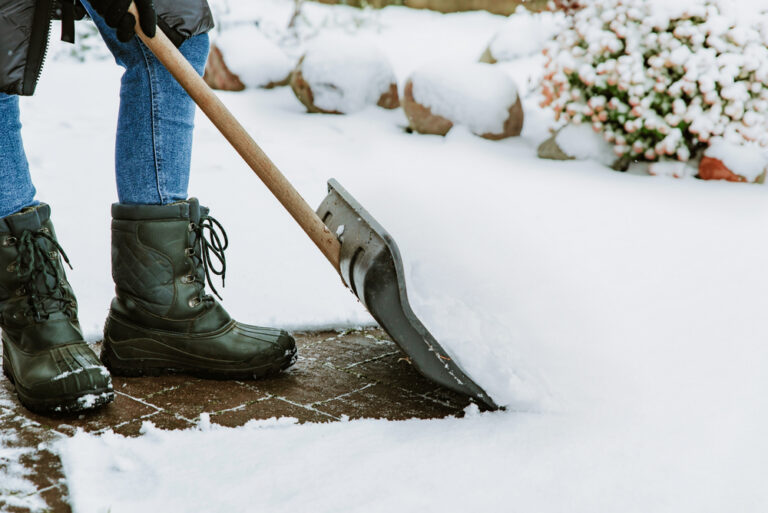
Deicing salts are the single greatest hazard to both surfaces. Sodium chloride and calcium chloride increase freeze-thaw cycles within porous materials. Q&E Keystone Masonry advises against applying standard chemical deicers to any decorative masonry during its first winter.
Realistic Material Lifespans
Properly placed 4-inch-thick stamped concrete, built using a 3,500 to 4,000 PSI air-entrained mix, control joints cut within 12 hours of pouring, and a 6- to 8-inch compacted stone subbase, reliably lasts 25 to 30 years in harsh climates. While the surface finish can show wear over time, a full color restoration using a tinted sealer or micro-topping applied by Q&E Keystone Masonry runs $4 to $9 per square foot and restores appearance for another decade.
Natural bluestone outperforms almost all alternative building materials. Historic masonry installations routinely reach 80 to 120 years of service life without significant stone degradation; only the setting bed or underlying mortar requires eventual renewal. Material thickness is critical: 1-inch stone flagstone is ideal for wet-laid concrete bases, whereas dry-laid installations require 1.5- to 2-inch stone to withstand heavy point loads without cracking.
Repairs Favor Stone; Surface Consistency Favors Concrete
When an individual bluestone unit cracks or loosens, a mason from Q&E Keystone Masonry carefully removes that single piece, rebuilds the mortar bed, and resets a replacement stone. The repair blends seamlessly into the patio within a season as the new stone weathers naturally. Repair costs generally range between $180 and $450 per unit depending on stone dimensions and jobsite access.
Stamped concrete repairs require different considerations. A cracked slab section cannot be swapped individually; options involve routing and sealing cracks with color-matched flexible compounds, resurfacing the entire slab, or replacing an entire panel along control joints. Because matching weathered integral pigments is challenging, section patches remain somewhat visible.
Conversely, stamped concrete offers a smooth, continuous surface plane with no vertical lip variations. This makes it an ideal surface for large outdoor entertaining areas where patio furniture moves frequently. Natural cleft flagstone features organic thickness variations of 1/8 to 1/4 inch, creating a textured aesthetic that offers rustic character.
Slip Resistance, Heat Absorption, and Pool Decks
Thermal-finish bluestone provides exceptional non-slip traction wet or dry, making it the industry standard for pool coping, walkways, and entrance steps. Stamped concrete slip resistance varies based on texture depth and sealer selection. High-gloss acrylic sealers over smooth slate patterns can become slick when wet. Q&E Keystone Masonry mitigates this by incorporating non-slip polymer grit additives directly into the final sealer coat during installation.
Surface temperature varies based on color selection across both materials. Dark charcoal stamped concrete and full-color bluestone capture intense summer heat, reaching surface temperatures 20°F to 30°F higher than lighter buff, gray, or soft tan alternatives.
Selecting the Right Material for Your Outdoor Space
- Large Open Patios (600+ sq. ft.): Stamped concrete delivers significant cost savings across broad square footage while providing elegant patterns and custom border details.
- Front Walkways and Main Entryways: Natural bluestone excels on front walkways due to high traffic, close-up visual appeal, and higher exposure to winter deicing.
- Historic and Natural Stone Architecture: Natural flagstone or bluestone offers an exact match for traditional fieldstone foundations, architectural stone veneer, and mature landscaping.
- Pool Surroundings: Thermal bluestone coping combined with either a stamped concrete or natural stone deck provides optimal edge durability and non-slip safety.
- Sloped or Poorly Draining Sites: A reinforced concrete slab base—whether finished as stamped concrete or used as the structural foundation for wet-laid stone—provides superior stability in challenging soil conditions.
Get an Estimate from Q&E Keystone Masonry
Q&E Keystone Masonry designs and installs custom stamped concrete and natural flagstone patios engineered to withstand severe weather cycles. Every project includes evaluations of base depth, site drainage, border details, and pattern options.
Contact Q&E Keystone Masonry today to schedule an on-site consultation and review custom side-by-side design options for your home.