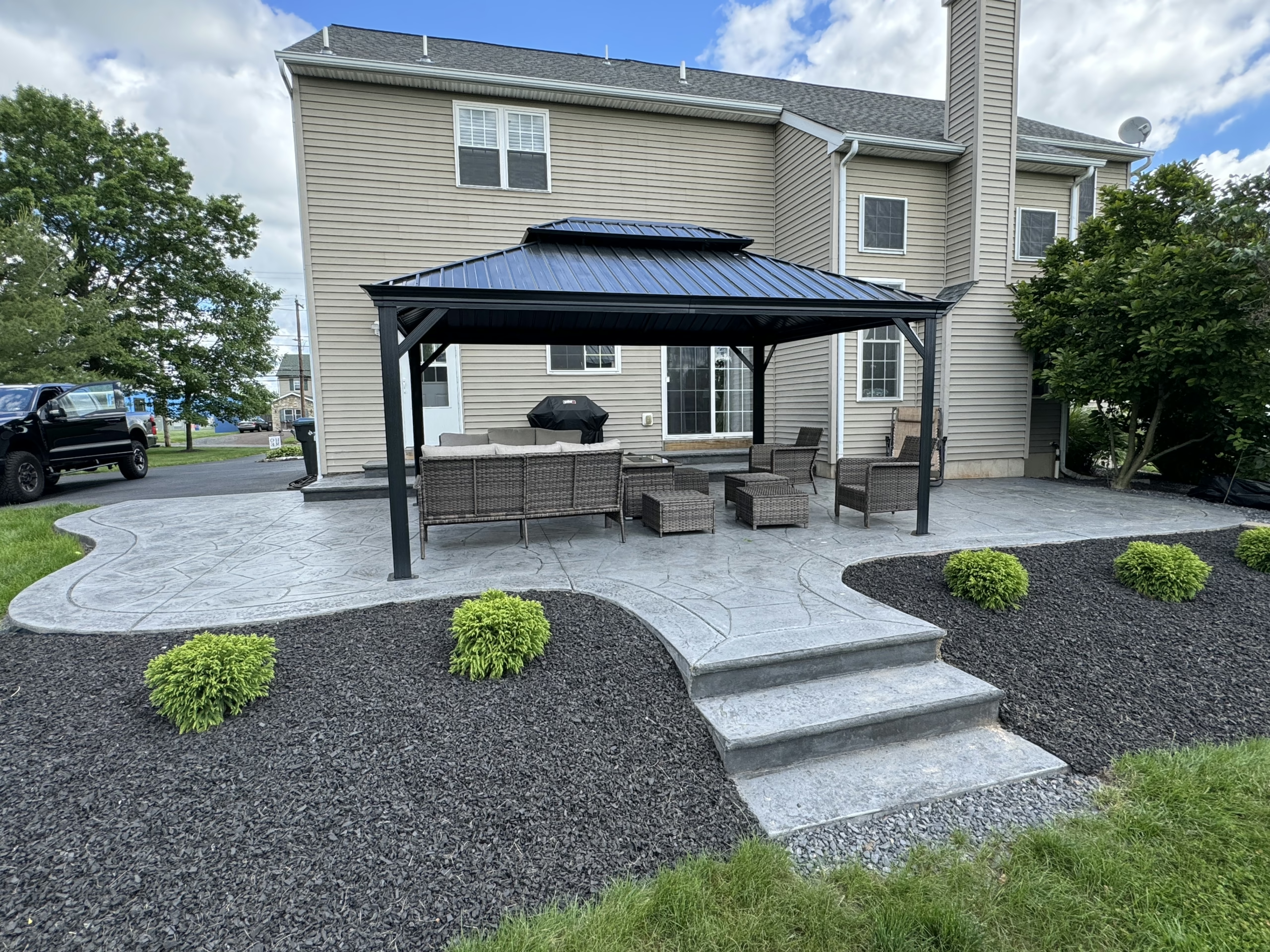


Your ideal stamped concrete project is now complete. The lovely textured surface has had the necessary 28-day drying period, and the contractors have cleaned up the job site and packed up their equipment. As you stand in your backyard or gaze at your newly installed driveway, you’re struck by how beautifully your outdoor area has been transformed—the deep hues, elaborate designs, and expert finishing that have increased the visual appeal and market value of your home. Then comes the issue that every homeowner must ask: “Do I really need to seal this stamped concrete, or is it just an upsell from contractors?” This question is frequently brought on by well-meaning neighbors, internet forums, or financial concerns.
Your hesitancy is reasonable, and this question is not unusual. The extra expense of sealing your stamped concrete can be an unpleasant surprise after spending thousands of dollars on its installation, particularly if the surface appears flawless right now. Given how sturdy and well-built the concrete looks, many homeowners question whether sealing is just another maintenance cost they can put off or even avoid.
The concrete industry has been debating sealing for decades, with differing views on applications for plain concrete. However, when it comes to stamped concrete, there is broad agreement supported by performance data and in-depth field study. One basic idea unites professional installers, maintenance specialists, material scientists, and even insurance companies: sealing stamped concrete is essential for long-term success and protecting your major purchase.
The Science Behind Stamped Concrete Vulnerability
Sealing is much more important for stamped concrete because it presents specific obstacles compared to plain concrete. Intricate patterns and textures produced by the stamping process are beautiful, but they also increase the surface area that is vulnerable to environmental harm. These intricate impressions serve as places of gathering for hazardous chemicals, water, and debris.
The Porosity Problem
Consider concrete to be a hardened sponge with millions of small pores. These pores become extra annoying in stamped concrete because:
- More surface complexity increases the number of places that pollutants and water can enter.
- In certain situations, color additives used in stamped concrete can actually make the material more porous.
- The natural protective qualities of concrete may be impacted by residues left by release agents employed during stamping.
Chemical Reactions You Can’t See
Several unseen processes start right away when stamped concrete is left unsealed:
- Carbonation: The concrete’s calcium hydroxide and atmospheric carbon dioxide combine to progressively erode the surface and change its color.
- Alkali-Silica Reaction: When aggregates in concrete react with alkalis under specific circumstances, internal expansion and eventual cracking can happen.
- Chloride Penetration: De-icing agents and road salts erode any embedded reinforcement and harm structures by penetrating deeply into unsealed concrete.
The Real Cost of Skipping Sealer
Most homeowners focus on the immediate cost of sealing—typically $0.50 to $1.50 per square foot. Homeowners looking to protect their investment in stamped concrete in Conshohocken, PA, quickly learn that sealing helps preserve both color vibrancy and long-term durability.
But the true financial impact of skipping this step becomes evident over time:
Year 1-2: Subtle Changes
- Slight color fading, which is frequently explained as “settling in”
- Tiny spots that appear to be readily removed
- Minimal weathering-induced surface roughening
Year 3-5: Noticeable Deterioration
- Staining organic compounds permanently
- Visible shifts in color throughout the surface
- Surface scaling in freeze-thaw environments begins
- Repairs should cost between $2 and $5 per square foot
Year 6-10: Major Problems
- Deep discoloration that needs to be ground or cleaned with acid
- Cracks in the structure that need to be repaired
- Refinishing the entire surface is required
- Repairs should cost between $5 and $12 per square foot
Beyond 10 Years: Replacement Territory
- Beyond cost-effective restoration, surface integrity is damaged
- Uneven surfaces provide a safety risk
- Complete replacement is required
- Replacement expenses are estimated to be $8–15 per square foot
Advanced Sealer Technologies: Beyond Basic Protection
Stamped concrete sealers of today provide much more than just water resistance. Cutting-edge technologies that offer several levels of protection are incorporated into contemporary formulations:
Nano-Technology Sealers
These ground-breaking technologies use minuscule particles that allow for breathability while penetrating deeper than conventional sealers. Advantages consist of:
- Self-healing qualities that can instantly patch small cracks
- Organic contaminants are broken down by photocatalytic activity
- Longer reapplication periods (5-7 years as opposed to 2-3 years)
Hybrid Sealing Systems
Combining the benefits of both penetrating and film-forming sealers:
- First application: Sealer that penetrates deeply for interior defense
- Second application: Topical sealant to improve the surface and make upkeep simple
- Result: Attractive look combined with maximum protection
The Professional vs. DIY Sealing Debate
Professional contractors are aware that the truth is more complicated, despite the fact that many sites portray sealing as a simple do-it-yourself task. Professional contractors recommend sealing stamped concrete in North Wales to guard against fading, staining, and surface damage caused by local weather conditions.
Why Professionals Get Better Results
- Surface Analysis: Before choosing the best sealer, experts check the pH, moisture content, and porosity of concrete.
- Environmental Expertise: They modify application methods in accordance with their understanding of how the local climate influences sealer performance.
- Equipment Benefits: Top-notch outcomes are achieved using commercial-grade sprayers, moisture meters, and surface preparation equipment.
- Product Access: Experts have access to contractor-grade sealers, which are frequently more durable and perform better than those sold to consumers.
The DIY Risk Factors
- Poor adhesion due to improper surface preparation
- Choosing the incorrect product for a given type or condition of concrete
- Clouding or inadequate curing due to application timing errors
- Chemical exposure risks to one’s health without the right gear
Maintenance Protocols for Maximum Sealer Life
Maintaining your sealer properly increases its lifespan and optimizes your investment in protection:
Monthly Maintenance
- Visual examination for indications of deterioration or wear
- Cleaning gently using only pH-neutral cleaners
- Removal of stains as soon as possible to avoid penetration
Seasonal Maintenance
- Using the proper concrete cleaners for deep cleaning
- Joint examination and, if required, resealing
- Assessment of the surface for resealing requirements
Annual Professional Assessment
- Measurement of sealer thickness with specialist equipment
- Testing for adhesion for the purpose of proper bonding
- Assessment of performance and suggestions for the upcoming year
Making the Investment Decision
Understanding the extensive advantages that materialize over various time periods and each providing unique value propositions for your real estate investment is crucial when deciding whether to seal your stamped concrete. Your concrete surface will be transformed in ways that are instantly apparent during the first year, offering both functional and aesthetic advantages. As high-quality sealers enter the pores of the concrete and form a protective layer that amplifies pigments and highlights the rich tones you initially chose during installation, an improved look and color depth happen almost immediately after application.
Because the sealed surface keeps out dirt, debris, and typical domestic spills that would otherwise seep through and discolor unsealed concrete, this aesthetic improvement is accompanied by far simpler cleaning and maintenance procedures. Furthermore, anytime an accident occurs, the protection against early staining is evident since spilled coffee, pet mishaps, or lost food may be easily cleaned up without leaving behind lasting stains that would cost a lot of money to remove.
From instant satisfaction to long-term protection and cost savings, the value proposition changes as we get into the medium-term advantages, which cover years two through five. Instead of deteriorating into a liability that lessens the curb appeal of your house, your stamped concrete keeps its appearance and keeps adding to the value of your property.
Because the protective layer removes the need for extensive cleaning treatments, stain removal services, or surface repairs that unsealed concrete normally requires, you’ll see noticeably lower maintenance expenditures throughout this time compared to unsealed surfaces. Most significantly, preventing structural deterioration during these crucial years spares you from having to make expensive interventions when the integrity of the concrete is threatened by water intrusion, freeze-thaw cycles, and chemical exposure.
Long-Term Benefits
The benefits that last longer than five years are the most significant return on your sealing investment, and they will significantly change how long your stamped concrete installation lasts. The surface life of properly sealed and maintained stamped concrete can be extended by decades, typically lasting 20–30 years as opposed to 8–12 years for unsealed surfaces under comparable circumstances.
Because you avoid the costly process of removing and reinstalling concrete surfaces that have deteriorated beyond repair, this endurance directly translates into avoided replacement expenses. Additionally, as concrete ages, it becomes more crucial to maintain both functionality and safety because sealed surfaces stay level and structurally sound, avoiding trip hazards and liability problems that can result from uneven, cracked, or deteriorating concrete.
The convincing financial reasoning behind sealing decisions is demonstrated by the return on investment estimate. Depending on surface condition, sealer quality, and local labor rates, initial sealing prices might range from $0.50 to $1.50 per square foot. This is a very small upfront investment when compared to the possible repercussions of neglect. When repairs are required, the cost of preventing damage can be anywhere from $5 to $15 per square foot, which is three to ten times the initial expenditure.
The ROI period usually lasts three to five years, so your investment in sealing will return for itself rather fast, thanks to lower maintenance and repair expenses. Concrete sealing is one of the most economical home maintenance techniques available to property owners who wish to safeguard their outdoor living assets because, when computed over a 20-year period, total savings frequently approach 300–500% of the initial investment.
The Clear Path Forward
“Does stamped concrete need to be sealed?” is no longer just a yes-or-no question. “How can I implement the most effective sealing strategy for my specific situation?” is the actual query. Installing a high-quality sealing system professionally not only protects concrete but also preserves your investment, increases the value of your property, and prepares your house for many years of lovely, useful outdoor living.
The important thing is to act before harm is done, regardless of whether you decide to collaborate with experts or do the project yourself. Sealing may have stopped the cumulative degradation that occurs every day that stamped concrete is left exposed.
The concrete industry’s message is unanimous: seal your stamped concrete, do it right, and do it soon. Your future self will thank you for making this wise investment in your property’s long-term beauty and value. Protect the beauty and longevity of your stamped concrete, schedule a professional sealing service today and keep your investment looking its best for years to come.