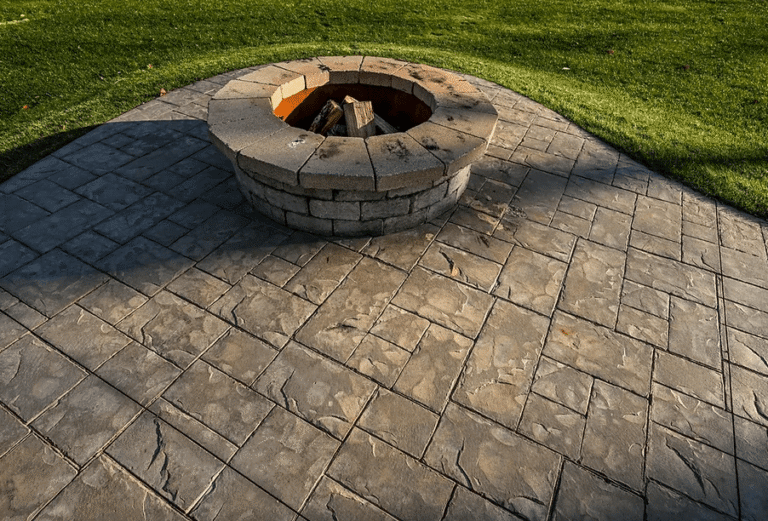
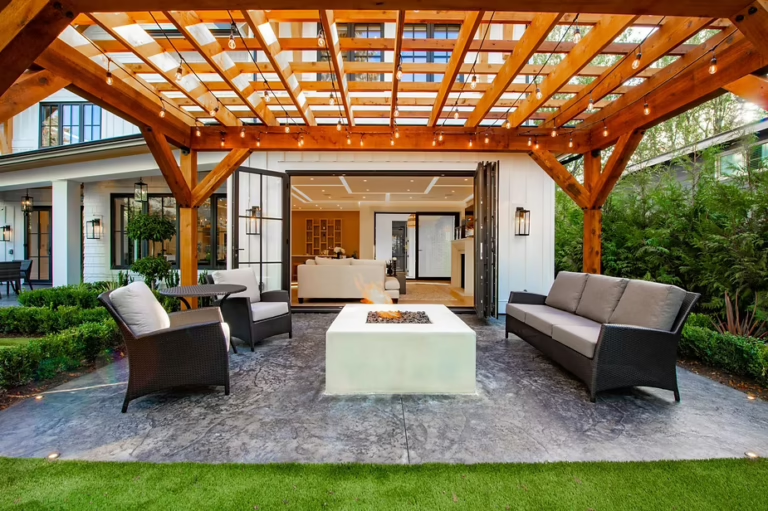
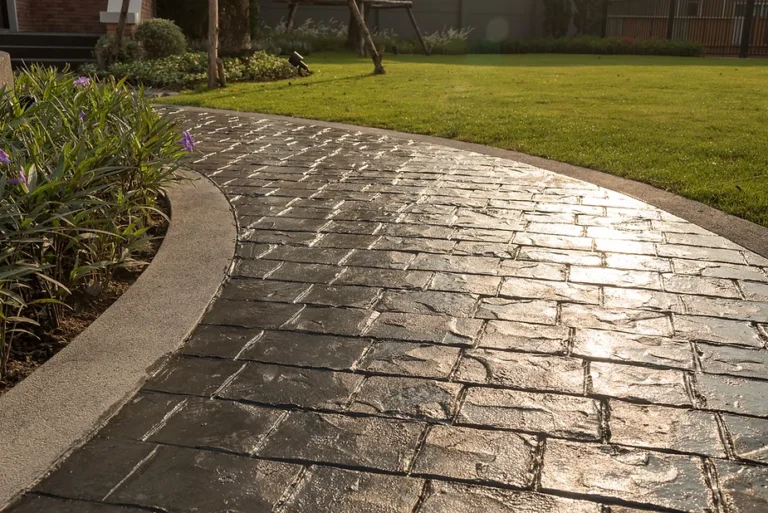
A single winter of rock salt on a decorative slab can do more visible damage than five summers of sun and rain combined. Property owners who notice flaking color, pitted texture, and chalky white residue across their patio pattern usually see these issues in early spring, right after the winter thaw. Nearly all of that damage traces back to three controllable factors: chemical deicers, saturated concrete entering a freeze, and a protective sealer that wore off two winters earlier.
At Q&E Keystone Masonry, our seasonal maintenance protocols focus on preventative sealing, surface diagnostics, and advanced polymer repairs to keep decorative stamped concrete patios in Souderton structurally sound and visually striking year after year.
What Deicers Actually Do to a Decorative Slab
Deicers do not dissolve concrete the way acid does. They work by lowering the freezing point of water, keeping liquid brine sitting on and inside a surface that would otherwise be frozen solid and relatively stable. The resulting damage is physical first and chemical second.
Brine Saturation and Osmotic Pressure
Salt-laden water is denser than clean water, pulling additional moisture deep into the capillary pores of the slab through osmotic pressure. When ambient temperatures drop below the brine’s freezing point, that trapped moisture expands roughly 9% inside micro-pores that have no room to accommodate the expansion. This generates immense outward hydraulic pressure against the top 1/8 inch of the slab—the exact layer where integral color, release hardener, and textured stamping reside.
The Freeze-Thaw Multiplier
In harsh winter regions, ambient temperatures swing across the 32°F threshold dozens of times between late autumn and early spring. Applying chemical deicers does not reduce those freeze cycles; it increases the frequency with which a slab freezes while saturated with moisture instead of remaining safely frozen solid.
Products That Attack Cement Paste Directly
Some deicers are chemically aggressive in addition to driving physical freeze-thaw cycles:
- Ammonium Sulfate & Ammonium Nitrate: Frequently found in inexpensive ice melts and lawn fertilizers, these compounds chemically react with and dissolve cement paste. They are the single most destructive materials you can spread on concrete.
- Magnesium Chloride & Calcium Chloride: While they melt ice at lower temperatures than rock salt, both chemicals react with calcium hydroxide in the cement paste, accelerating surface disintegration over repeated seasons.
- Sodium Chloride (Rock Salt): Though less chemically reactive than chloride alternatives, rock salt still drives the destructive brine saturation cycle and accelerates corrosion on any internal steel reinforcement it reaches.
Why Stamped Surfaces Scale Before Broom-Finished Slabs
A decorative stamped patio is finished differently than a standard utility slab or driveway, making its surface characteristics unique during winter weather:
- Surface Densification: Color hardeners are broadcast and hand-troweled into the wet top layer during installation. This creates a dense, highly finished skin that holds fine pattern detail, but it also results in a tighter pore structure with fewer microscopic air voids at the immediate surface.
- Air Entrainment Dynamics: Quality exterior concrete in freeze-thaw climates is mixed with 5% to 7% entrained air—microscopic air bubbles that provide expansion relief for freezing water. Intensive hand-troweling during stamping can collapse these air voids near the very top of the slab, making the decorative surface layer the most vulnerable section during severe freezes.
- Water Ponding in Textures: Low spots or deep stamp impressions that collect standing water enter winter fully saturated, making them the first areas to show signs of surface scaling.
The First-Winter Rule for New Decorative Concrete
While fresh concrete achieves most of its design compressive strength within 28 days, its internal matrix continues to hydrate and tighten for months. Consequently, new slabs hold higher internal moisture through their initial cold season.
No deicing chemical of any kind should touch decorative concrete poured within the previous twelve months.
Newly installed slabs placed by Q&E Keystone Masonry receive an initial cure-and-seal application during construction, followed by a high-solids decorative topcoat once thoroughly cured. Our teams schedule secondary protective coatings during warm, dry weather rather than rushing applications in late autumn.
Safe First-Winter Traction: Clean coarse sand or non-clumping poultry grit provides instant slip resistance without chemical risks. Both materials can be swept or washed away in spring without damaging the pattern or leaving chemical residue.
Acrylic Sealer Application and Resealing Timelines
A high-grade acrylic sealer serves as the primary barrier preventing water and brine from penetrating the cement paste.
Application timing and preparation dictate how well the protective coating performs:
- Ideal Application Windows: Late spring (late April to early June) or early autumn (mid-September to mid-October) offer ideal ambient conditions. Early fall application is preferred, as it makes sure the acrylic film fully cures before the first hard freeze.
- Temperature Standards: Air and slab surface temperatures must hold between 50°F and 90°F during application, with no rain forecast for 24 hours and no freezing temperatures for 48 hours.
- Moisture Controls: The slab must dry for at least 24 to 48 hours following pressure washing. Sealing over trapped internal moisture causes moisture entrapment, resulting in a cloudy or chalky white appearance.
- Spray vs. Roller Application: Two thin, sprayed coats outperform a single heavy coat. Over-application traps solvent, leads to surface blistering under direct sunlight, and causes premature edge peeling.
- Resealing Schedule: Residential patios require professional resealing every 2 to 3 years. Patios with unshaded, full-sun exposure should be evaluated every 2 years.
To improve slip resistance on wet surfaces, Q&E Keystone Masonry integrates non-slip polymer grit or fine silica additives directly into the final sealer coat on steps, pool decks, and heavily trafficked pathways.
Snow Removal Practices That Preserve Patterned Finishes
Mechanical snow removal is far safer for decorative surfaces than chemical ice melts.
Clearing snow before it compacts into ice eliminates the need for chemical deicers altogether:
- Use Polycarbonate or Plastic Shovels: Metal-edged shovels strike raised pattern seams, chipping away sealer, color hardeners, and surface detail.
- Adjust Snow Blower Equipment: Fit snow thrower blades with non-marring rubber or plastic skid shoes, elevating the auger housing roughly 1/4 inch above the high points of the stamped pattern.
- Control Drainage Lines: Make sure roof downspouts, scuppers, and surrounding grades direct snowmelt away from the patio surface rather than letting water flow across it.
- Rinse During Mid-Winter Thaws: When temperatures rise above 40°F during winter breaks, perform a clean-water rinse to remove salt track-in from shoes, boots, and pet paws.
Identifying and Treating Early Surface Scaling
Surface scaling begins subtly but offers clear early warning signs:
- Aggregate Sanding: A fine dusting of loose sand-like grit on the slab after a winter thaw indicates the cement binder has begun releasing fine aggregate near the surface.
- Flaking High Points: If running an awl or fingernail across a textured peak lifts a paper-thin skin of color, the topcoat sealer has worn thin and requires cleaning and recoating.
- Moisture Darkening: Darkened sections of concrete that remain damp hours longer than surrounding areas indicate unsealed, absorbent zones that are highly susceptible to scaling in the next freeze.
Schedule a Winter Readiness Inspection with Q&E Keystone Masonry
Protect your outdoor investment before severe winter weather sets in. Q&E Keystone Masonry provides complete inspection, deep surface washing, high-solids acrylic resealing, and polymer overlay restorations for stamped concrete patios, walkways, and pool decks.
Contact Q&E Keystone Masonry today to schedule a sealer assessment and secure your service date before the cold weather arrives.