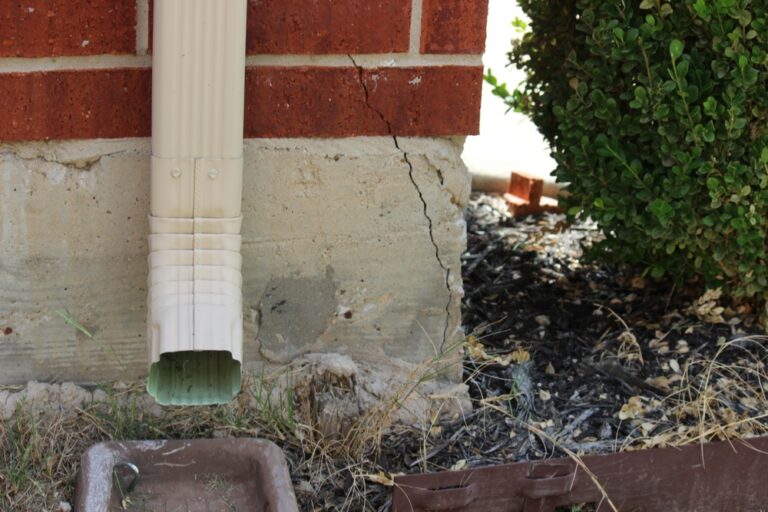
As autumn foliage turns vibrant shades of orange and red across local neighborhoods, property owners naturally shift their focus to yard cleanups, leaf raking, and winter preparations. However, beneath the colorful fallen leaves lies a quiet physical dynamic that impacts your property’s primary structural assets: soil moisture accumulation behind retaining walls and concrete masonry unit (CMU) block foundations.
October weather patterns bring frequent, lingering rain showers. As fallen organic debris collects along fence lines, yard perimeters, and building foundations, it traps surface runoff, forcing large volumes of water directly into the surrounding soil.
For retaining walls and basement foundation walls, this influx of water introduces massive mechanical forces that can compromise structural integrity if left unmanaged; Q&E Keystone Masonry resolves these issues with masonry services in Bucks County.
The Silent Destroyer: Unraveling Hydrostatic Pressure
To understand why retaining walls bow and basement foundation blocks crack, homeowners must first understand hydrostatic pressure—the continuous physical force exerted by standing, stagnant fluid due to gravity.
Dry soil is relatively stable and possesses a manageable weight density. However, when autumn rain saturates ground soil, every cubic foot of earth absorbs liquid water, increasing its overall mass dramatically. A single cubic foot of dry soil weighs roughly 75 to 80 pounds; that exact same volume of saturated soil weighs upwards of 110 to 120 pounds.
When heavy October rain falls continuously over several days, hundreds of cubic feet of earth sitting behind your yard retaining wall or against your basement CMU block foundation transform into a massive, heavy sponge. Driven by gravity, this wet soil exerts tremendous sideways (lateral) force against your vertical masonry structures.
The problem escalates drastically when freezing temperatures arrive in late fall and winter:
- Lateral Loading: Heavy, wet autumn soil pushes continuously against concrete block walls, testing structural mortared joints.
- Frost Heave Expansion: When saturated ground soil freezes solid, trapped moisture expands, exerting outward and upward forces known as frost heave.
- Joint Shear and Cracking: The combined forces of lateral water weight and thermal expansion break mortar bonds, shift heavy block courses out of plumb, and cause structural wall failure.
Warning Signs: Inspecting Your Retaining Walls and Foundation Blocks
Early detection is essential to preventing catastrophic wall failure and costly foundation excavations. Property owners should perform a visual walkthrough of their hardscapes and basement perimeters each October, looking for these clear signs of stress:
1. Retaining Wall Deflections and Misalignment
Examine your stone, timber, or concrete block retaining walls by sighting directly down the top course line. Look for:
- Bowing or Bulging: A pronounced curve along the middle section of the wall indicates that hydrostatic water weight has overwhelmed the wall’s internal reinforcement.
- Forward Tilting: A wall leaning forward away from the hillside reveals sub-base instability, inadequate footings, or missing tie-back anchors.
- Separating Block Joints: Gaps opening between individual interlocking concrete units mean earth behind the wall is actively forcing blocks apart.
2. Foundation Wall Vulnerabilities (CMU & Block Work)
Inspect interior basement walls constructed from hollow concrete masonry units (CMU block):
- Efflorescence Accumulation: Fluffy white, powdery mineral deposits clinging to interior block faces serve as definitive proof that water is migrating directly through porous concrete blocks.
- Horizontal Step-Cracking: Stair-step cracks tracing along mortar joints—or horizontal cracks running parallel along mid-wall course lines—signal severe exterior earth pressure pushing inward against your home foundation.
- Corner Separation: Cracks forming where perpendicular foundation walls meet indicate differential soil movement around your home’s exterior perimeter.
3. Soil Surface Indicators
Observe the ground layout immediately behind retaining structures and along home foundations:
- Soil Sinkholes and Washouts: Deep channels or sudden depressions in ground soil signal that drainage water is carving unmanaged underground paths, washing fine soil particles out through wall joints.
- Standing Surface Water: Puddles lingering near wall footings hours after rain stops indicate poor site grading and inadequate subsurface drainage channels.
Modern CMU, Block Systems, and Drainage Infrastructure
Addressing hydrostatic pressure requires far more than patching visible mortar joints or stacking heavy blocks higher. Effective, long-lasting retaining walls and foundation structures rely on engineered drainage systems that relieve water weight before it builds up against masonry surfaces.
At Q&E Keystone Masonry, we construct retaining structures and block walls built to withstand regional climate challenges through multi-layered drainage engineering:
- High-Strength Concrete Masonry Units (CMU): Modern commercial-grade interlocking blocks and reinforced CMU walls offer superior compressive and structural shear strength compared to aging timber, dry-stacked fieldstone, or unreinforced brick.
- Clean Aggregate Backfill Zones: Rather than placing native dirt directly against the back face of a wall, we backfill the immediate zone with crushed, clean-washed aggregate stone. This creates an open, highly porous gravel column where groundwater drops freely down to base levels instead of accumulating against the wall face.
- Geotextile Filter Fabric: Heavy-duty woven filter fabrics line the excavation zone, preventing fine silt and clay particles from migrating into and clogging the clean gravel drainage channel over time.
- Perforated Drain Pipe Networks: Continuous, heavy-duty perforated drain lines (French drains) positioned at the base of the wall footings collect descending groundwater and redirect it safely away toward daylight outlets or discharge basins.
- Integrated Weep Holes: Strategically spaced escape ports along the base course of solid block walls allow trapped water to discharge freely, eliminating hydrostatic pressure pockets entirely.
Why Autumn Is the Critical Window for Structural Hardscape Work
Delaying retaining wall repairs or foundation stabilization until spring exposes your property to high-risk winter conditions. Wet autumn soil frozen solid during January creates maximum lateral pressures that can turn a minor wall tilt into a complete structural collapse over winter. Furthermore, spring thaw brings heavy snowmelt and rain that flood compromised foundation walls.
Executing structural masonry repairs, wall replacements, and drainage upgrades during October provides critical advantages:
- Workable Soil Conditions: Soil remains workable for excavation and compaction equipment prior to deep winter ground freezing.
- Protection Before Winter Freeze: Installing gravel drainage beds and wall reinforcements in October ensures your property handles winter snowpack and spring thaw without structural risk.
- Preserving Surrounding Hardscapes: Fixing retaining structures in fall prevents catastrophic soil collapses that ruin adjacent concrete patios, lawn spaces, and walkways.
Protecting your home’s foundation and yard contours requires robust materials and expert drainage design. Proactive fall maintenance keeps your property structurally sound, dry, and safe year-round.
Don’t allow heavy autumn rainfall and winter frost to compromise your property’s structural walls. Contact Q&E Keystone Masonry today to arrange a comprehensive retaining wall or foundation block inspection.