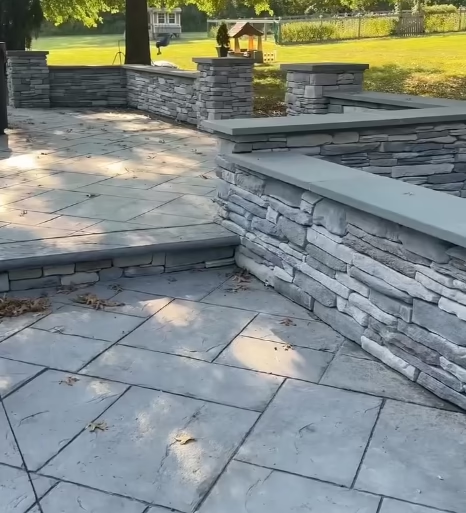
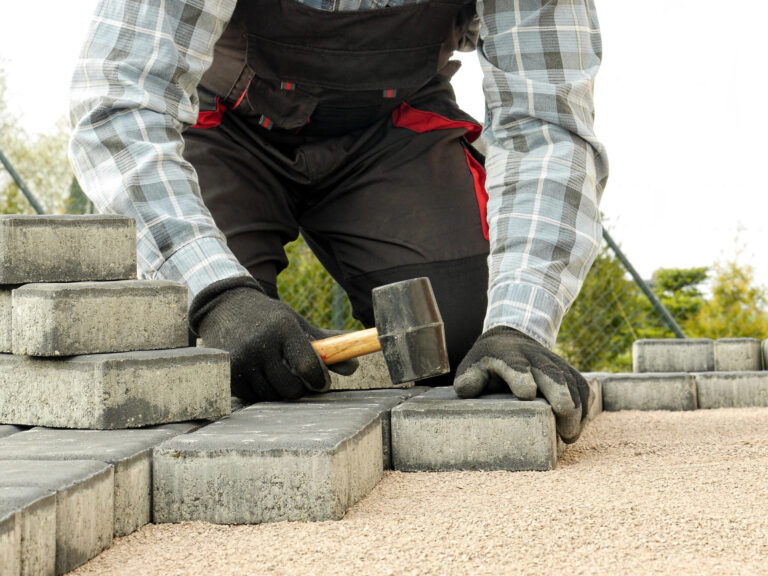
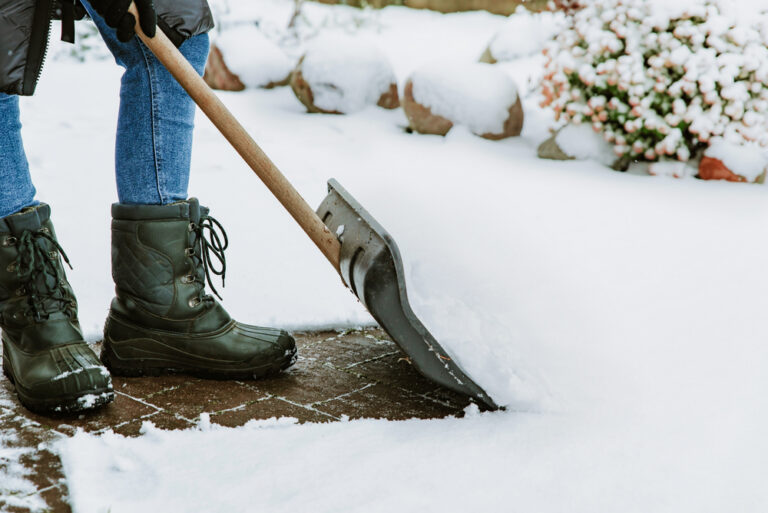
Late summer is the best window of the entire year for serious patio maintenance, because surfaces are dry, temperatures still support proper sealer cure, and the damage from three months of grilling and thunderstorms has not yet set permanently. Grease, leaf tannins and biological growth that sit through October end up frozen under snow and ice, where they bond into the pores of the stone. Cleaning and sealing now protects your hardscape through fall rainfall and winter freeze-thaw cycles.
This checklist is written for general contractors and builders who need to know what a masonry crew should actually be doing on a patio in late August and early September. The sequence matters more than the products, and skipping steps costs money in the spring.
Q&E Keystone Masonry can conduct professional maintenance on your concrete patio in Richboro and across many surfaces in the area.
Why the Late-Summer Deep Clean Is Not Optional
Summer leaves three distinct categories of contamination on outdoor surfaces, and each one behaves differently once cold weather arrives. Sealing over any of them locks the stain in place permanently, which is the single most common failure we get called out to correct.
- Grill grease and cooking oil: high-heat spills wick deep into porous stone and concrete, leaving dark halos that keep attracting dirt long after the visible spill is wiped up.
- Organic tannin stains: wet oak leaves, acorns and twigs release natural acids that leach brown color several millimeters into paver and stone pores.
- Algae, moss and mildew: shaded zones hold late-summer humidity, producing slick biological films that break down joint sand and create a real slip hazard on stair treads.
- Efflorescence: the white salt haze that migrates to the surface of concrete units after heavy irrigation or rain, which needs an acidic efflorescence remover, not a pressure washer.
Plan on a full drying window after cleaning. Most sealers require 24 to 48 hours of dry surface and overnight lows above 50 degrees Fahrenheit, which is exactly why waiting until mid-October rarely works in the Northeast.
Surface-Specific Care: Pavers, Bluestone and Stamped Concrete
Every hardscape material reacts differently to summer wear and to seasonal sealing. Matching the method to the material is what separates a professional job from an expensive resurfacing project two years later.
1. Paver Patio Maintenance
Interlocking pavers rely on stable joint sand as much as on the units themselves. Heavy summer rain washes polymeric sand out of the joints, which opens the door to weed roots, ant colonies and lateral movement in the field.
Proper paver patio maintenance starts with a controlled pressure wash, generally in the 1,500 to 2,500 PSI range with a 25-degree fan tip held at least 12 inches off the surface. Anything more aggressive strips the joints and blasts the aggregate off the paver face. Oil rings get spot-treated with an alkaline degreaser and a poultice before the general wash, never after.
Once the field is clean and dry, sweep in fresh polymeric sand, compact lightly, and activate per the manufacturer’s water schedule. Finish with a breathable, joint-stabilizing paver sealer that hardens the sand, blocks weed germination and keeps leaf tannins from soaking into the concrete units over winter.
2. Bluestone Patio Care
Natural stone needs a lighter hand, because the layered sedimentary structure of a bluestone patio is genuinely vulnerable to delamination and spalling. Harsh acid cleaners and zero-degree jet nozzles will lift the top lamination right off the stone face, and that damage cannot be reversed.
Use a soft-wash approach: a sodium hypochlorite or oxygenated cleaner at low pressure, dwell time of 10 to 15 minutes, then agitation with a natural-bristle deck brush. Rinse thoroughly and protect adjacent plantings, since runoff will burn turf and perennials.
For protection, specify a deep-penetrating siloxane or silane sealer rather than a film-former. It keeps water out of the stone while letting internal moisture vapor escape, which is what prevents the freeze damage and cloudy blushing you see under cheap topical coatings.
3. Stamped Concrete Patio Care
Decorative concrete depends entirely on its clear coat to hold color highlights and antique release agents. Once that film wears through, the color fades fast and the surface starts absorbing water.
Clean a stamped concrete patio with a neutral, pH-balanced concrete cleaner that lifts grime and grease without attacking the existing acrylic. Skip the muriatic acid entirely on colored work. A garden-hose surface cleaner attachment gives more even results than a wand on textured stamping.
Recoat with a high-grade solvent-based or water-based acrylic every two to three years, applied in two thin coats rather than one heavy one. Add a polymer grit at roughly 4 to 6 ounces per gallon on steps and pool surrounds so the surface does not turn into a skating rink when it rains.
Preparing Mortar Joints for Autumn Rain
Appearance is secondary here. The structural reason to do late-summer patio maintenance is that mortar joints between stone coping, brick borders and stepped risers absorb enormous volumes of water during fall storms.
When that trapped water freezes, it expands by roughly nine percent, which is more than enough force to break the bond between mortar and stone.
- Rake out failed mortar to a depth of 1/2 inch to 3/4 inch, using a grinder with a tuckpointing blade or a hand chisel on soft historic work.
- Repoint with type-matched mortar, packing it in lifts and tooling the joint slightly concave so water sheds instead of sitting.
- Let the repointing cure for a minimum of 7 to 14 days before any sealer touches it, and keep it damp during the first few days in hot weather.
- Apply a penetrating water repellent that forms a hydrophobic barrier inside the mortar matrix, so rainwater beads and rolls off rather than saturating the assembly.
How This Season’s Problems Should Shape Next Year’s Patio Design
If a patio needs constant scrubbing, holds puddles for hours after a storm, or heaves in the same three spots every March, the issue is not the cleaning schedule. Late summer, while you can still watch water move across the surface during a real downpour, is the right time to evaluate the layout.
- Drainage corrections: replacing a poured slab with a properly engineered paver patio installation lets the crew build a compacted base, set a 1 to 2 percent pitch away from the foundation, and integrate channel drains where surface flow concentrates.
- Material upgrades: smart patio design puts dense, low-absorption units under outdoor kitchens and grill stations where grease is guaranteed, and saves softer, more textured stone for lounge areas.
- Base depth: failing sections almost always trace back to an undersized base, typically less than the 6 to 8 inches of compacted aggregate most residential installations need in frost-prone soils.
- Edge restraint: spreading joints at the perimeter usually mean the restraint was never spiked properly, and no amount of new sand will fix it.
Documenting these observations now gives you a real scope of work for a spring build instead of a guess. It also lets clients budget over the winter, which tends to produce better decisions than an emergency call in May.
Get Your Patio Sealed Before the First Freeze
Q&E Keystone Masonry handles end-of-season deep cleaning, repointing and sealing for builders and homeowners, and we schedule these projects on a first-come basis through September and early October. Call or send over your square footage and material type, and we will put together a scope and price for the work.